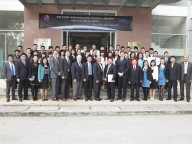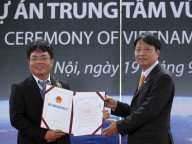


Overview
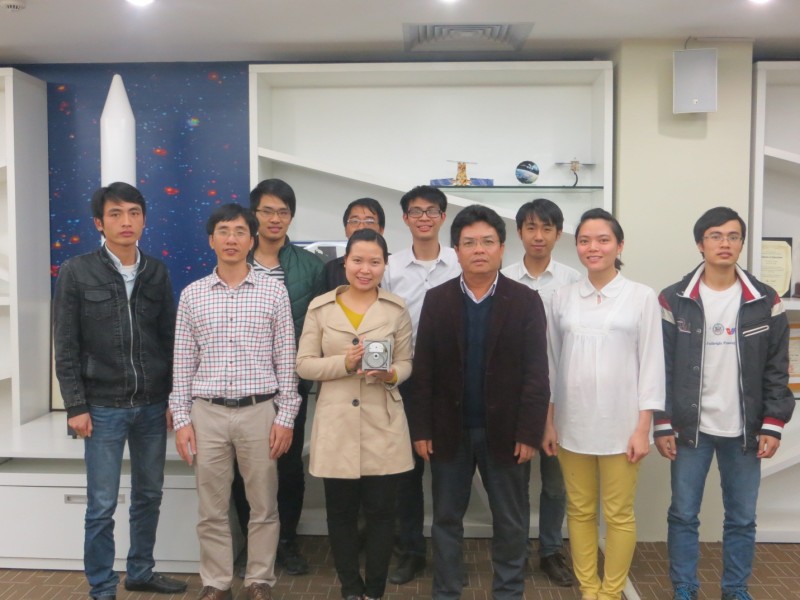
- Name: Department of Satellite Research and Development (SRD)
- SRD is a research department established in 2012
- Focus on basic research and development of subsystems and components of small satellites
- Place: 3rd floor, Building 2A, Nghia Do Experimental Manufacturing Center, No. 18, Hoang Quoc Viet Str., Cau Giay District, Hanoi, Vietnam
Members
- No. of members: 22
- Including: 2 PhDs, 8 Master Degree, 12 Engineers and Bachelors
Research Area
Tasks:
- Research on mechanical, electronic, and control subsystems of spacecraft system
- Research and development of new technology applied for manufacturing and development of satellite
- Research and development of equipment and technology applied for satellite mission
Topics:
- Development of methods, algorithms, and simulators of satellite attitude determination and control system
- Calculation, design and simulation of kinematics and dynamics of spacecraft
- Development of command and data handling technology for satellite
- Calculation and design of power system and thermal control of satellite
- Satellite communication system and methods
- Research on optical/SAR payload and other sensors for small earth observation satellite
Research groups:
- Navigation and control group: research on Attitude Determination and Control System (ADCS) and Command and Data Handling (C&DH) of satellite
- Electrical and Electronic Group: research on electrical and electronic parts of satellite such as power subsystem (PSU), communication module (COM), etc
- Structure and thermal group: research on kinematics, dynamics, mechanical and thermodynamics of satellite
- Mission group: research on optical/SAR payload, telemetry system, etc.
Project:
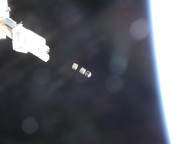
- “Manufacturing, testing and lauching of pico-sat FM”, VAST’s research project (2010-2013), completed
- “Research, design and development of high-accuracy attitude determination and control simulator of earth observation satellite”, National-level research project (2014-2016), implementing
- “Design of pico-sat experimental model (PicoDragon Kit) for space technology training”, VNSC’s research project (2014), completed
Publications
- Pham Anh Tuan and Vu Viet Phuong, “Micro-satellite Constellation – The challenges and the possible contribution of VNSC”, Journal of Geological Resource and Engineering, Vol. 2, No. 2, Page 107 – 110, 2014
- Pham Anh Tuan, “Recent Development of EO Satellite in Vietnam”, The 26th CEOS Plenary at Bangalore, India, 2012
- Bui Nam Duong, Pham Anh Tuan and Nguyen Tuan Vinh, “Reseach and Application of Isogrid Structure in Design of Microsatellites”, The 6th Vietnam Conference on Mechatronics (VCM-2012), Hanoi, 2012
- Hoang The Huynh, Tran Cong Duong, Ngo Duc Minh, Bui Thi Ha, Tang Quang Minh, Vu Viet Phuong and Pham Anh Tuan, “Design of Solar simulator for Testing of Attitude Determination and Control Simulator”, The 7th Vietnam Conference on Mechatronics (VCM-2014), Binhduong, 2014
- Le Xuan Huy, Nguyen Tien Su, Pham Anh Minh, Nguyen Truong Thanh, Hoang The Huynh, Vu Viet Phuong, Pham Anh Tuan and Vu Minh Duc, “Analysics and Simulation of Attitude Determination System of Zero-gravity Testbed” The 7th Vietnam Conference on Mechatronics (VCM-2014), Binhduong, 2014
Training and Coopeartion
Training:
- Cooperation with University of Technology, Vietnam National University in Hanoi, in training of undergraduate in space technology
- Cooperation with University of Science and Technology in Hanoi, in training of undergraduate and graduate in space technology and application
Photo library